
History of England

History of England

The story of the English people—ancestry, kingship,
inheritance, and cultural identity

Preserving the English Legacy

The history of England spans over a thousand years, built on a deep generational journey and a continuous line of descent. Today, however, that shared memory is frequently fragmented and obscured, threatening to disconnect the country from its ancestral past.This website serves as a definitive archive for the documented history of the English people, their nation, and the empire they built.

By focusing strictly on verified records, major developments, and real conflicts, we bypass contemporary agendas to present the true foundations of English identity—a heritage that grew directly from the actual populations who settled, shaped, and governed the shires.
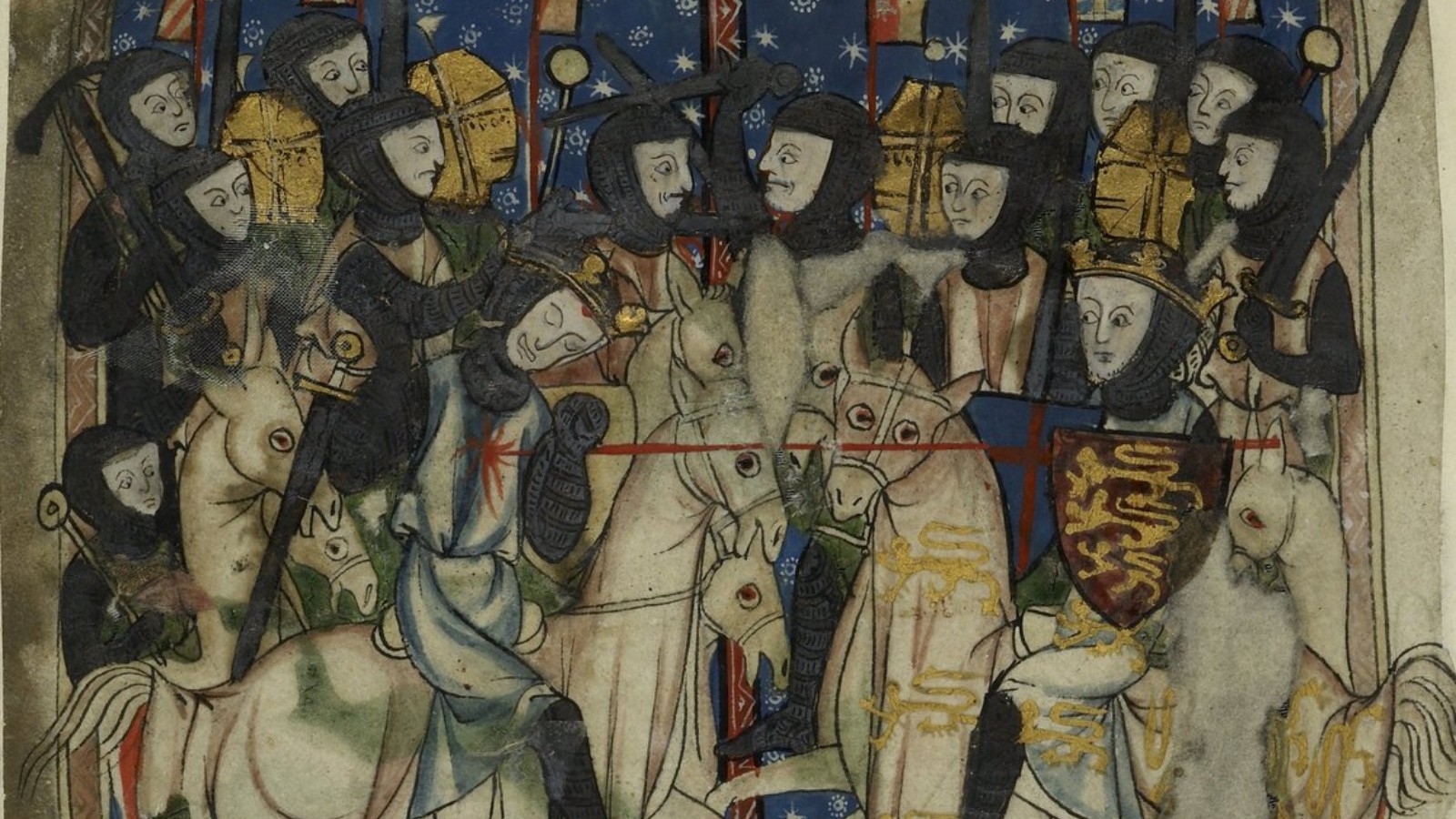
Anglo-Saxon England

410 - 1066 AD

The foundational era where English identity was forged amid the chaos of the post-Roman collapse, Viking invasions, and the ultimate unification of the Anglo-Saxon kingdoms.
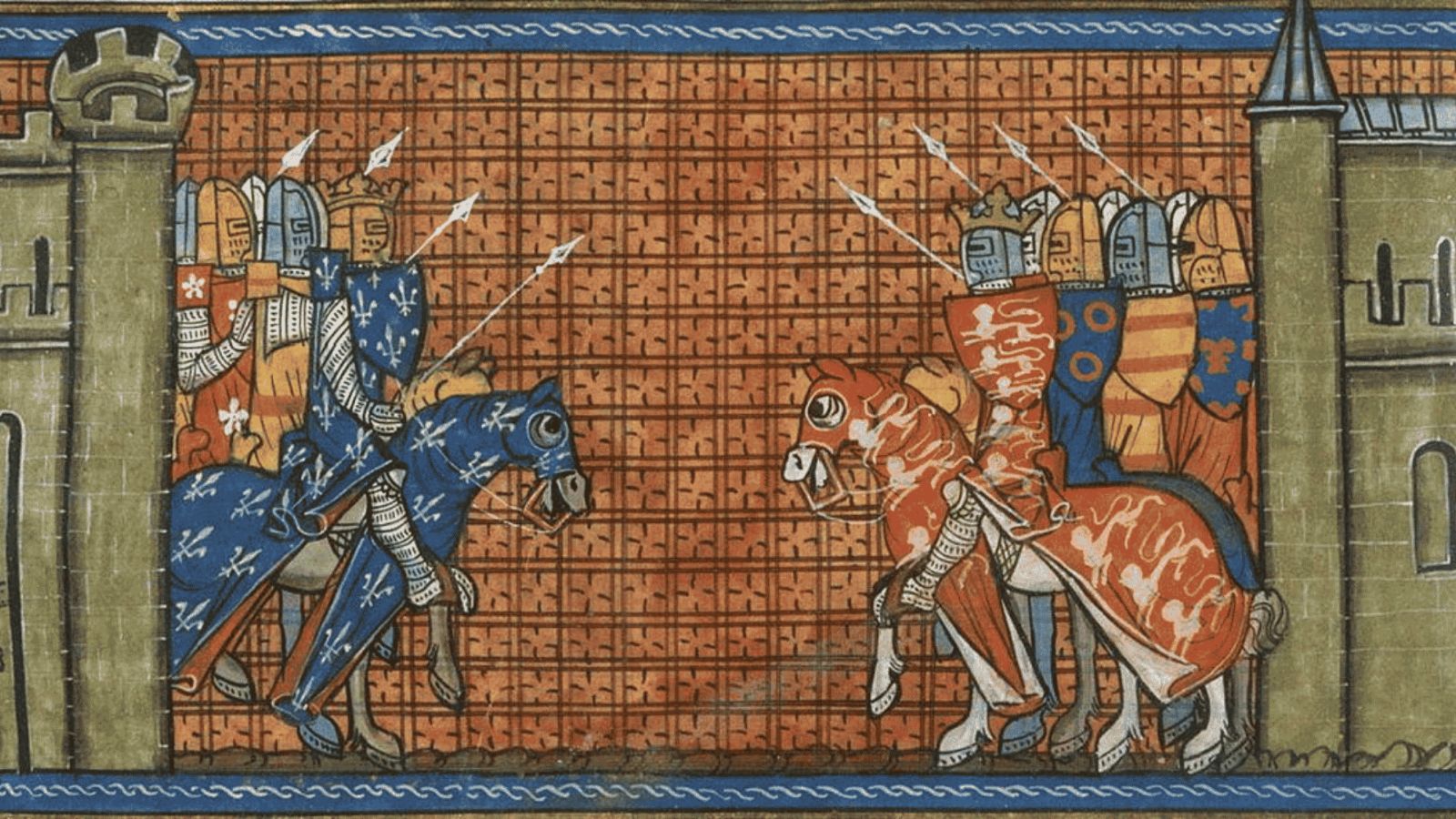
A medieval illuminated manuscript miniature depicting a legendary duel between two armies or monarchs, often identified as the combat between the forces of the French and English crowns. On the left, a crowned king clad in blue armor and a matching blue caparison patterned with the French fleur-de-lis rides a dark horse, leading a line of knights with shields, helms, and raised spears. On the right, an opposing crowned king clad in red armor with a caparison and shield bearing the three golden English lions charges forward on a reddish-brown horse, backed by his own line of heavily armored knights. The two forces confront each other on a narrow strip of ground flanked by stone castle towers on both edges, set against an intricate, orange-and-brown geometric tiled background.

The Plantagenet Era

1154 - 1485 AD

An era of territorial ambition and legal revolution, defined by the Magna Carta, the conflicts of the Hundred Years' War, and the bitter domestic clashes of the Wars of the Roses.
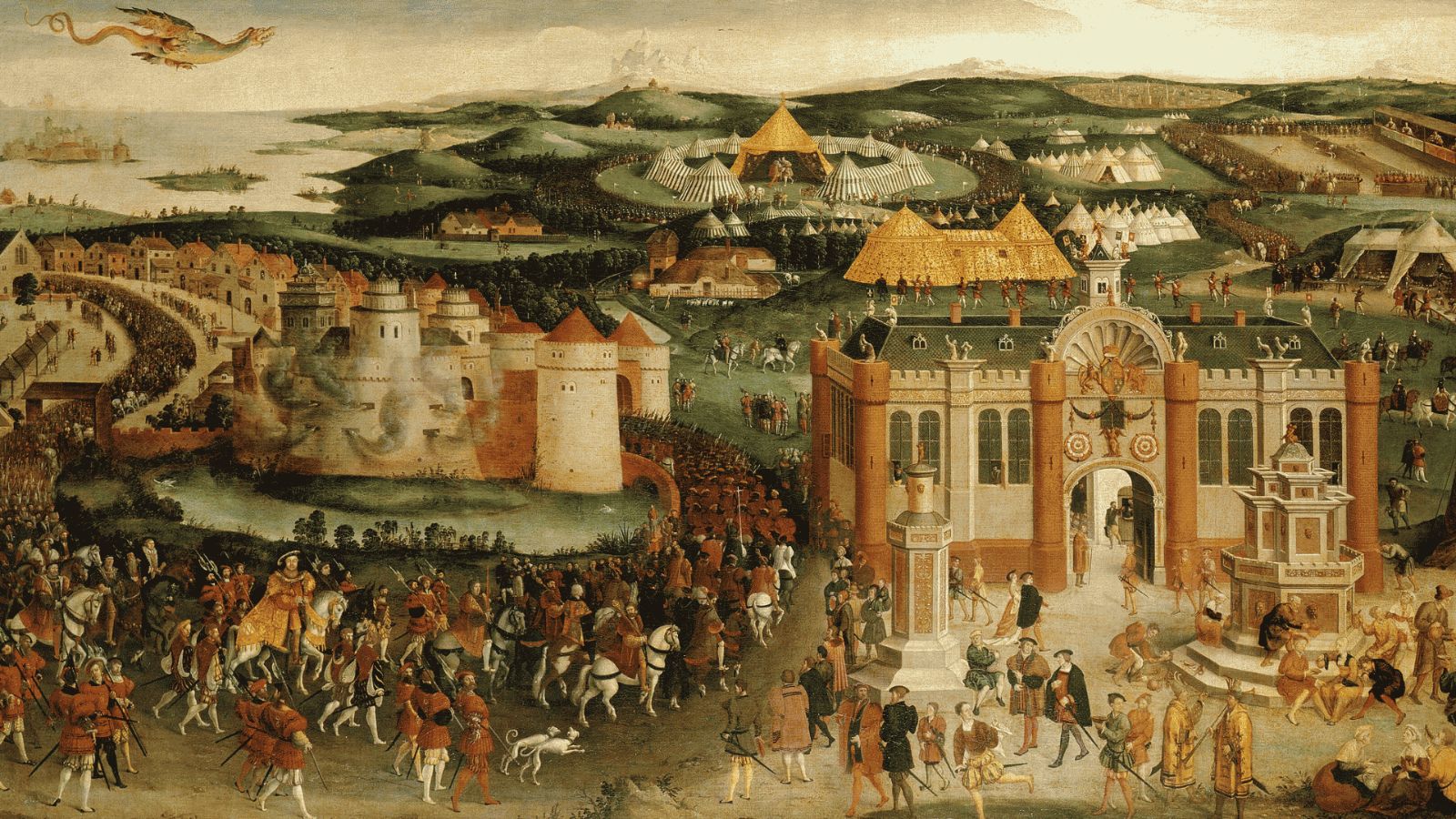
The Tudor period

1485 - 1603 AD

An era of dramatic transformation, marked by a sweeping religious revolution, the historic defeat of the Spanish Armada, and the rise of England as a dominant European power.

A People that Shaped the World

From a small island on the edge of Europe, the English people built a legacy that transformed the globe. The birth of common law, the rise of parliamentary democracy, and the spark of the Industrial Revolution all began here, leaving a permanent imprint on human history. At its peak, this realm exported justice, governance, and ordered liberty to every continent—reshaping the lives of billions and laying the foundations of the modern world.

These global achievements did not happen by chance. They grew directly from the distinct culture, shared kinship, and character of the English themselves. This historic framework was forged by a population deeply tied to their land, translating their internal values into worldwide systems.

Our archive tracks this global impact back to its source, mapping the ancestral roots, legal evolutions, and spiritual traditions that define our nation.
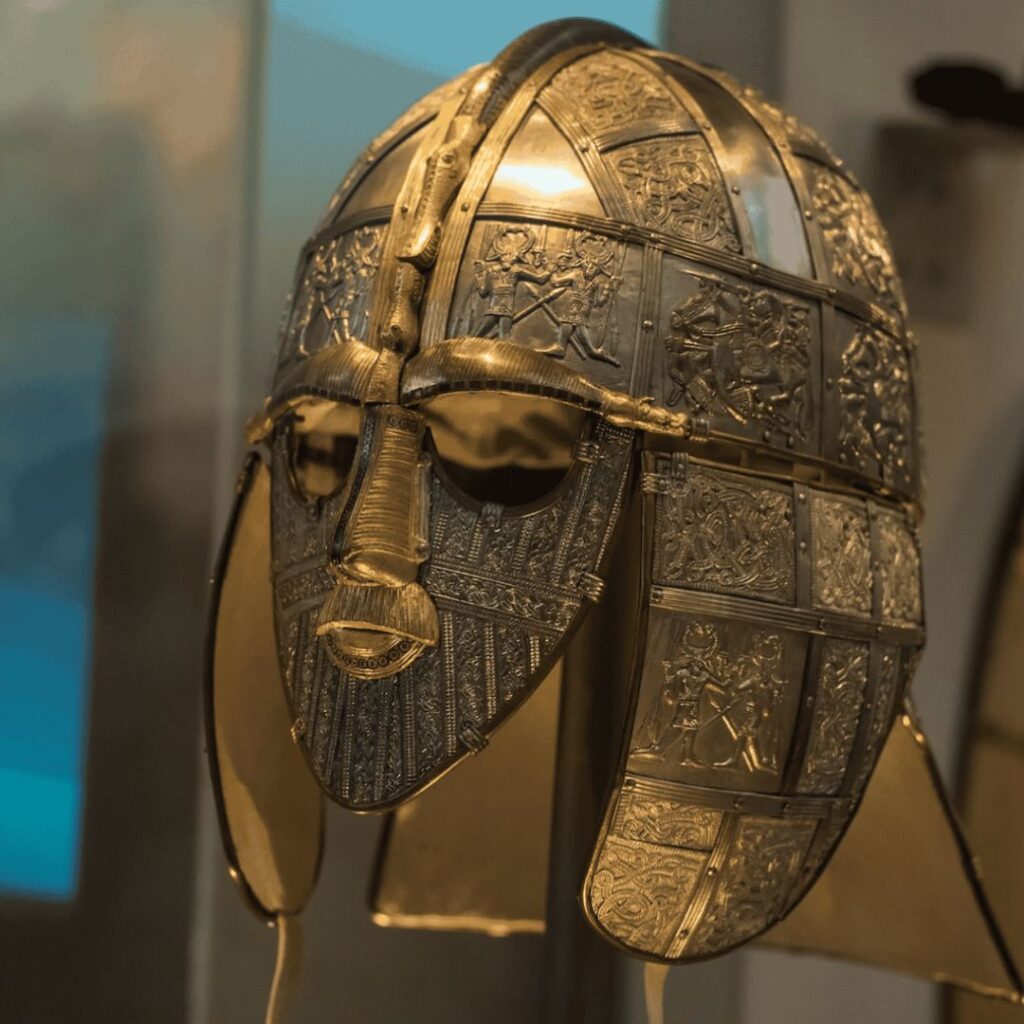
Replica of the Anglo-Saxon Sutton Hoo helmet (c. 7th century), thought to have been owned by King Rædwald of East Anglia.

1,100 Years of Monarchy: Æthelstan to Charles III.

For over eleven centuries, the English monarchy has survived as a cornerstone of European history. From the immediate heirs of Alfred the Great to the modern reign of King Charles III, the Crown has weathered the bloody birth of a unified nation, bitter existential struggles between king and parliament, the rise and fall of an empire, and the slow transition into a constitutional state.

This survival was never a peaceful evolution. It was a relentless battle against foreign threats, domestic rebellions, and devastating dynastic wars that repeatedly tore apart the line of succession. As the institution entered the modern era, the old absolute powers of the throne gave way to a historic role of national continuity, grounding the state through centuries of rapid political decay and social transformation.
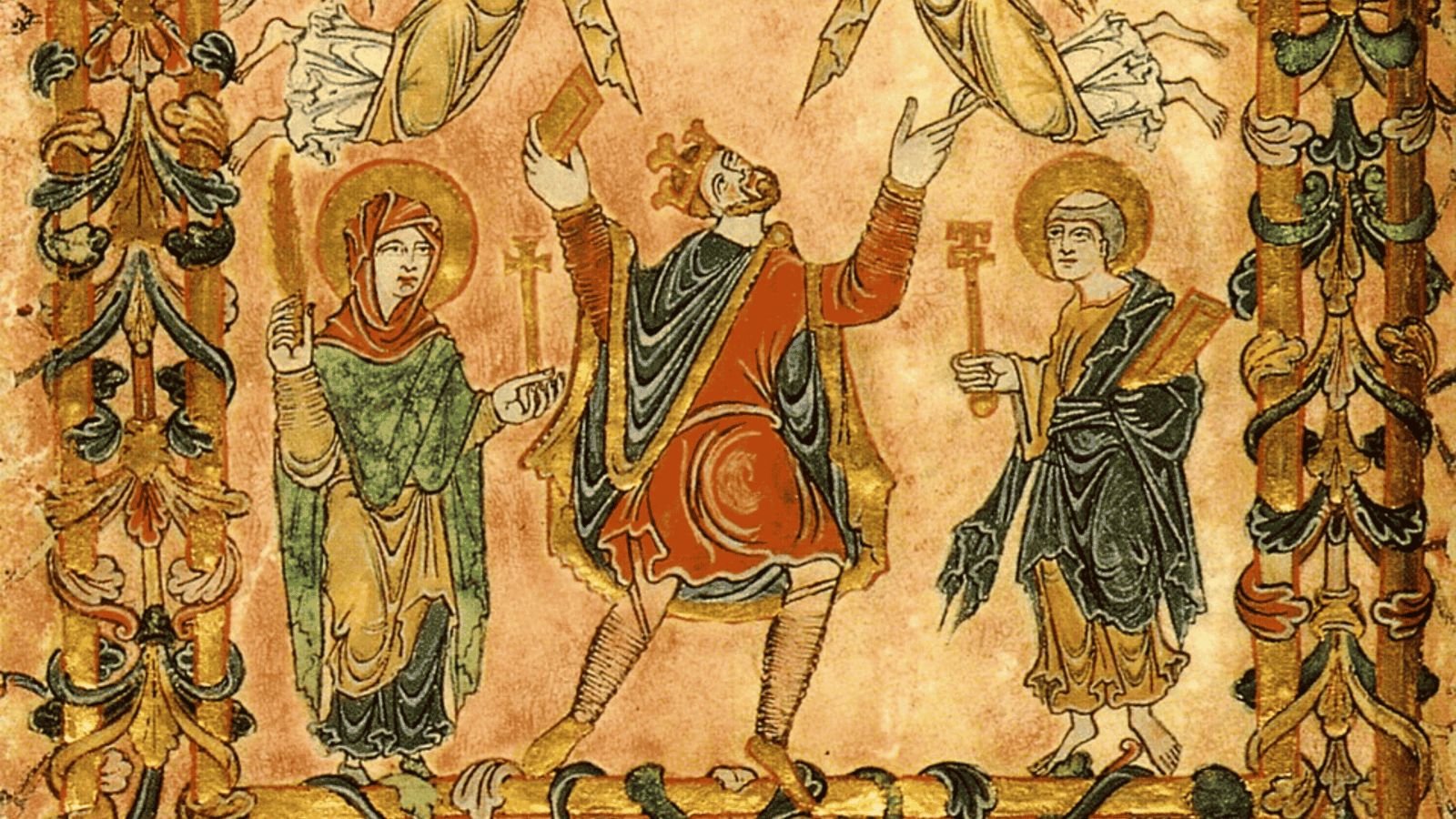
An Anglo-Saxon illuminated manuscript miniature from the New Minster Charter, depicting King Edgar the Peaceful offering the charter to Christ. In the center, the crowned king looks upward in devotion, raising his hands toward a heavenly vision while flanked by the Virgin Mary on the left, who holds a palm branch, and Saint Peter on the right, who holds a ceremonial key and an open book. The entire scene is enclosed within an ornate, symmetrical border decorated with intricate acanthus leaf foliage in gold, red, and green tones, showcasing traditional late 10th-century Anglo-Saxon art and royal dress.

House of Wessex

802 - 1066 AD

The royal house that forged England. From Ecgberht’s rise to dominance and Alfred the Great's heroic defence, through centuries of struggle and achievement, to their chaotic end in 1066.
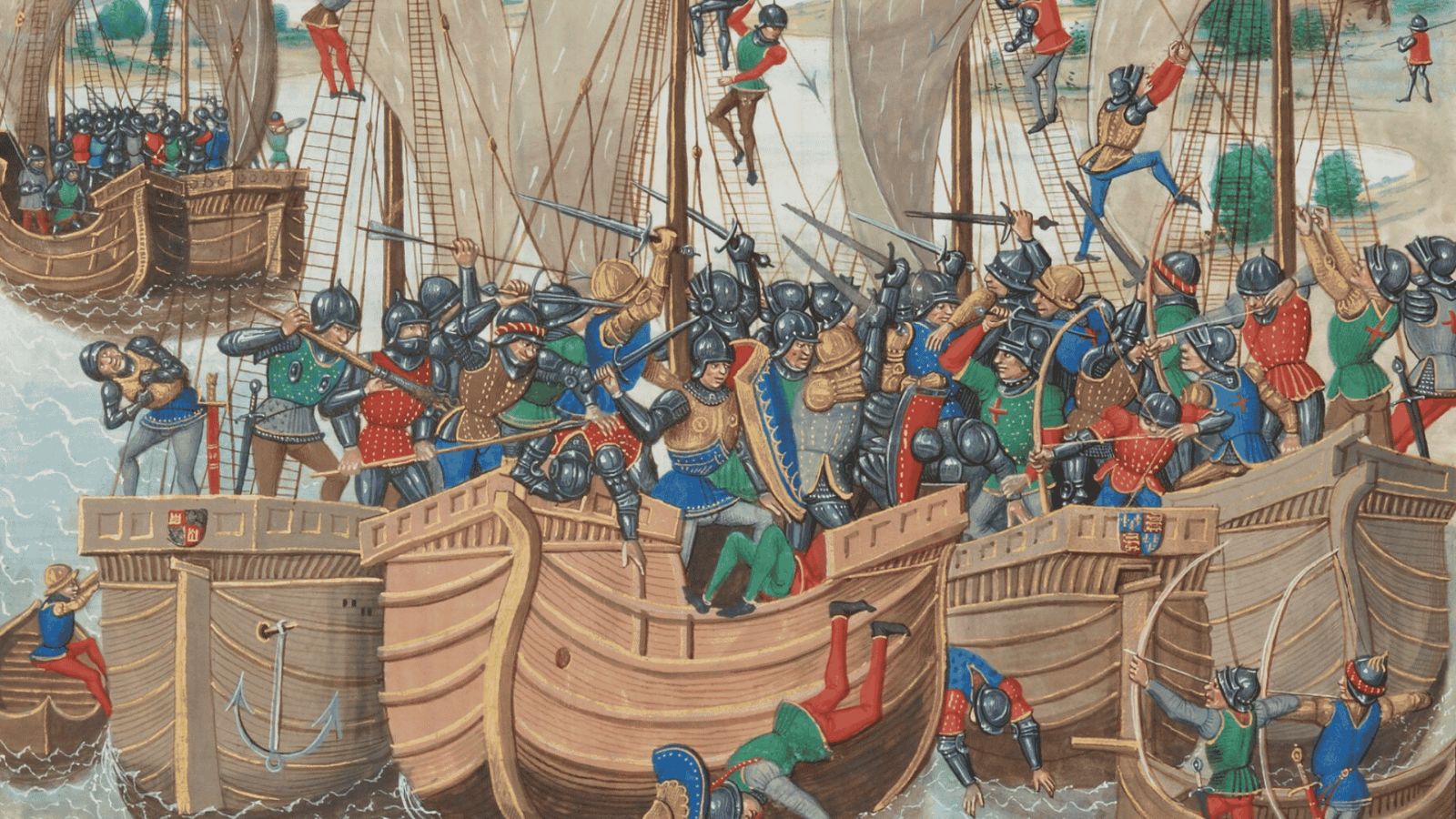
A medieval illuminated manuscript miniature from Froissart's Chronicles depicting the Battle of Sluys during the Hundred Years' War. In the center, multiple wooden English and French warships are locked together in intense, close-quarters combat on the sea. Fully armored House of Plantagenet knights and French soldiers clash on the decks with swords, axes, and long spears, while archers on the right draw longbows to shoot arrows into the melee. In the foreground, several defeated soldiers fall headfirst over the sides of the wooden hulls into the water, and in the upper rigging, sailors climb the masts and shrouds to drop projectiles onto the decks below.

House of Plantagenet

1154 – 1485 AD

A formidable dynasty of warriors, lawmakers, and empire-builders who expanded royal authority, fought bitter family wars, and left a lasting impact on English law, governance, and monarchy.
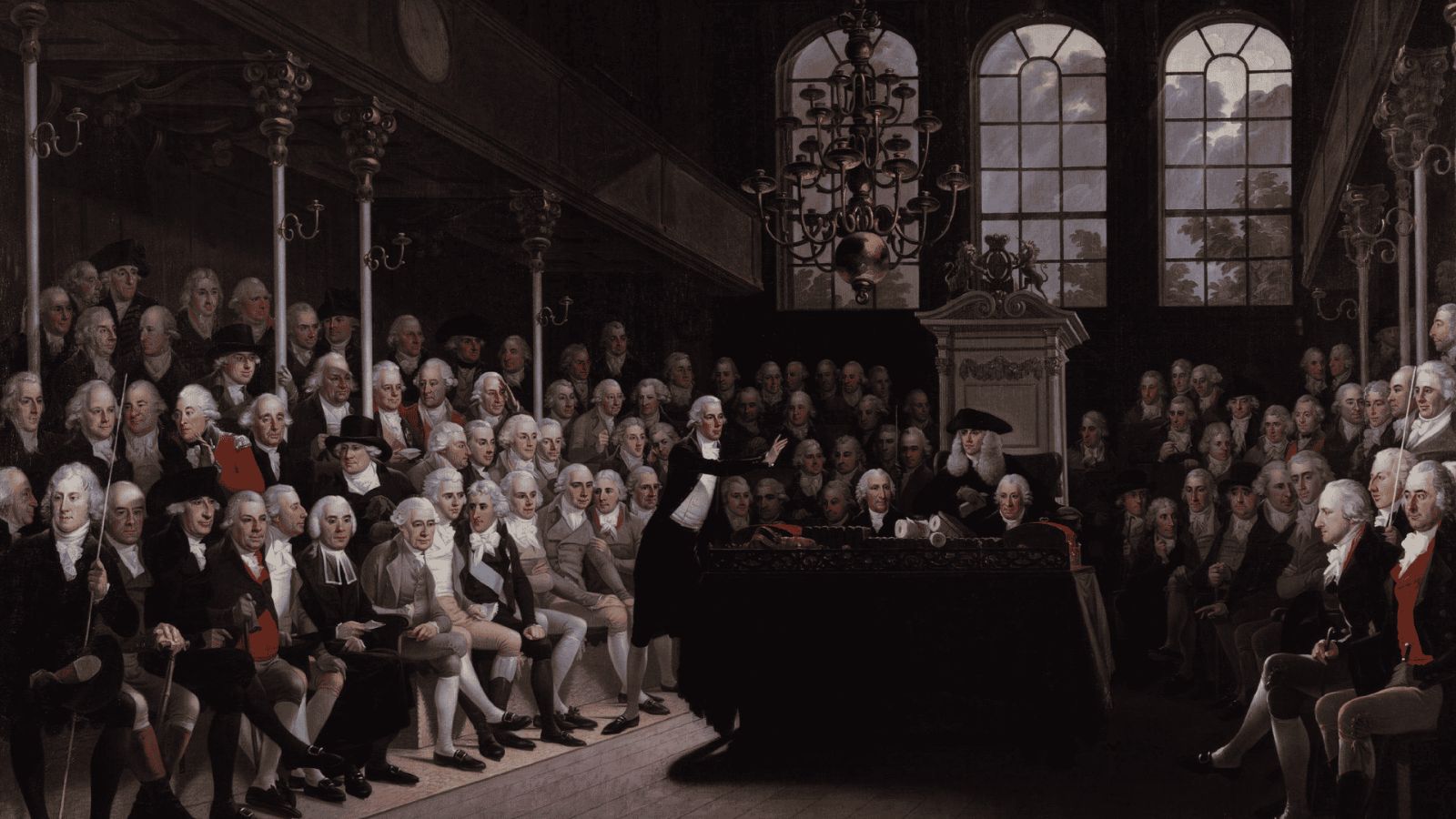
An 18th-century painting by Karl Anton Hickel depicting a session of the House of Commons in 1793. In the center foreground, William Pitt the Younger, the Prime Minister, stands addressing the chamber with his arm extended toward a large, dark wooden table strewn with documents and rolls of parchment. Behind the table, the Speaker of the House sits in an ornate, high-backed wooden chair beneath a large brass chandelier hanging from the ceiling. Densely packed rows of Members of Parliament, dressed in formal 18th-century coats, waistcoats, and powdered wigs, line the green benches on both sides of the chamber, listening attentively under high, arched windows.

House of Hanover

1714 – 1901 AD

The House of Hanover adapted to a changing world, accepting the limits of royal power and overseeing Britain’s rise to global supremacy under kings such as George III and Queen Victoria.

Stay Connected

If you believe that England’s history matters and deserves to be told with absolute honesty, join our growing community today.

Subscribe to receive our latest articles, exclusive deep dives, and regular updates as we document, protect, and safeguard the authentic narrative of the English people.

The Spread of Civilisation: A Global Footprint

From a string of vulnerable coastal trading posts, the English built the largest empire in human history, acting as a profound force for good that fundamentally shaped the modern globe. Driven by maritime daring, commercial enterprise, and unparalleled naval supremacy, this expansion began when bold explorers set sail into uncharted waters, opening up the world for future generations. From the epic global circumnavigations of Sir Francis Drake and James Cook to the charting of vast continents, these pioneering voyages carried English law, technology, and language to every corner of the earth, establishing order and lifting societies across the globe.

This sweeping expansion was a monumental saga of discovery, development, and sheer administrative will. It birthed the global trading routes that fueled the Industrial Revolution, introduced structures of justice and parliamentary governance, and forged stable new nations across the oceans.

Our archive explores this historic legacy, tracing the legendary voyages, civil struggles, and lasting legal frameworks that allowed a small island kingdom to become the ultimate architect of ordered liberty worldwide.
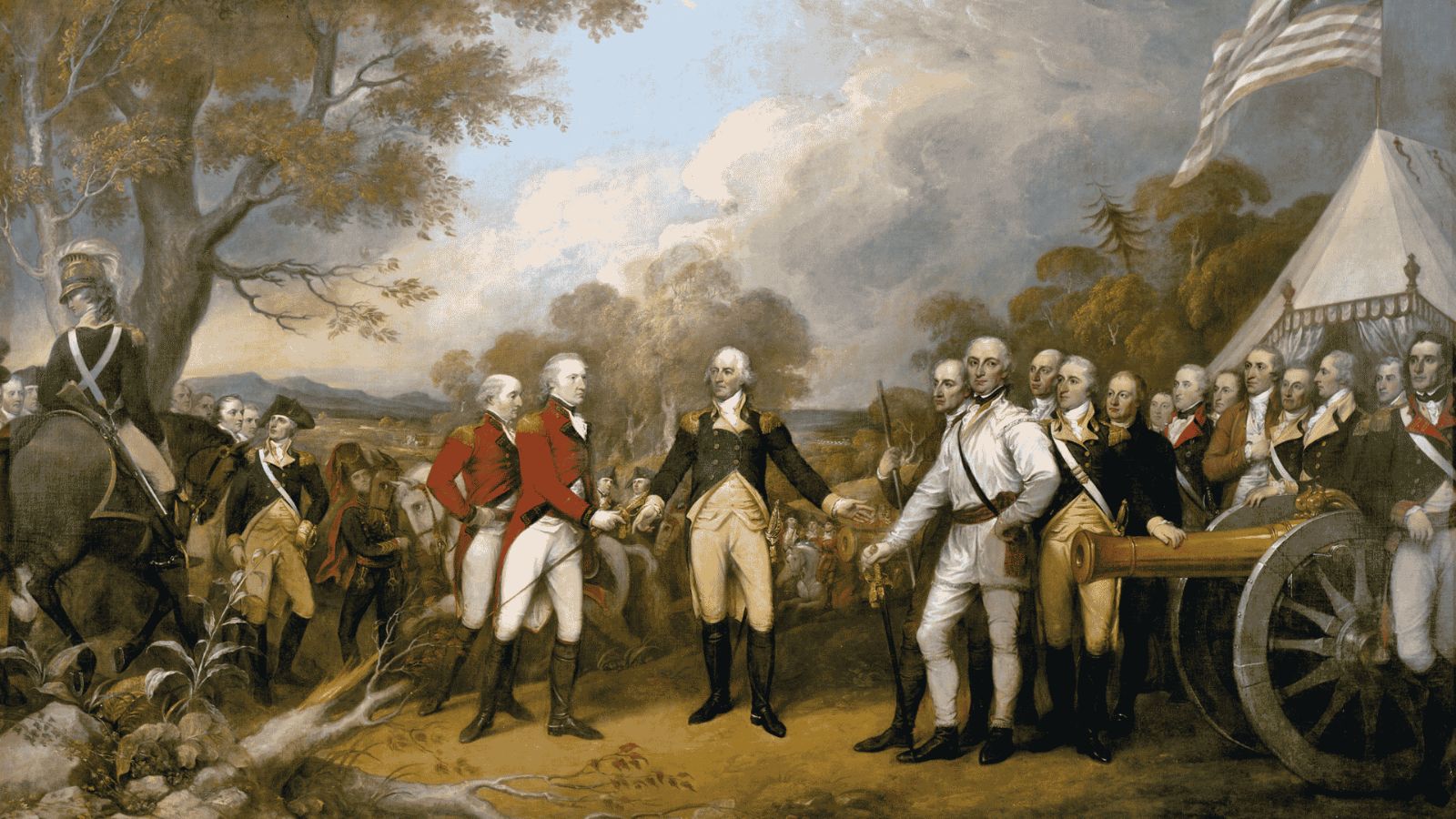
An 18th-century historical painting by John Trumbull depicting the Surrender of General Burgoyne at Saratoga. In the center, American General Horatio Gates, dressed in a blue and buff continental uniform, stands with open hands to receive British General John Burgoyne, who is dressed in a bright red coat and offers his sword. To the left, other British officers in red coats stand beside mounted cavalrymen under the shade of a large tree. To the right, a dense assembly of continental officers stands next to a large brass cannon positioned near a white military tent, beneath an early American flag waving against a dramatic, cloudy sky.

The First British Empire

1583 – 1783 AD

Centered on the pioneering settlement of North America and the Caribbean, this foundation era established England’s maritime trade networks across the Atlantic economy.
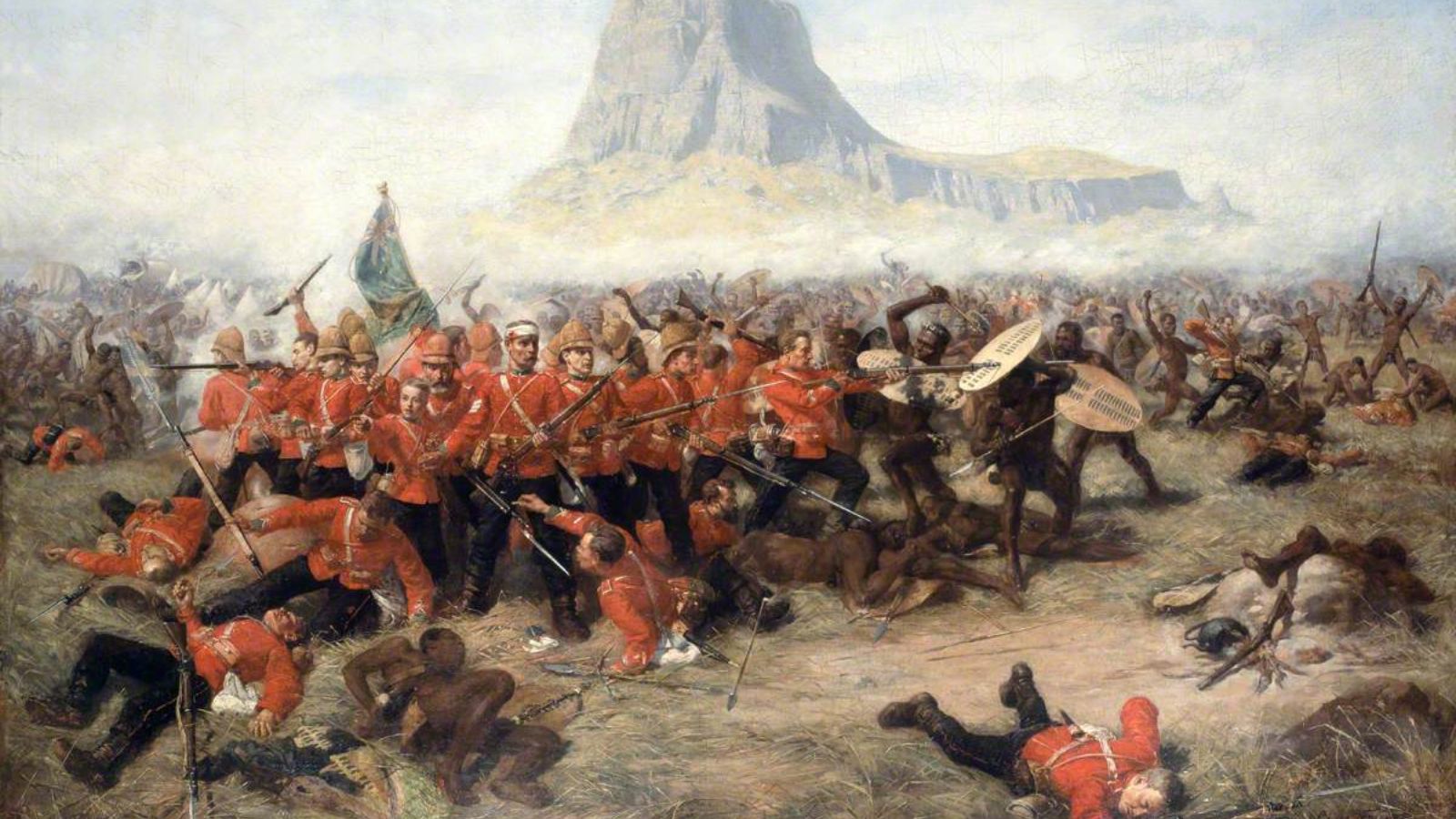
The Second British Empire

1783 - 1945 AD

Marked by a historic pivot toward Asia, Africa, and the Pacific, this triumphant era saw the consolidation of the British Raj, the opening of new frontiers, and undisputed naval and economic supremacy.
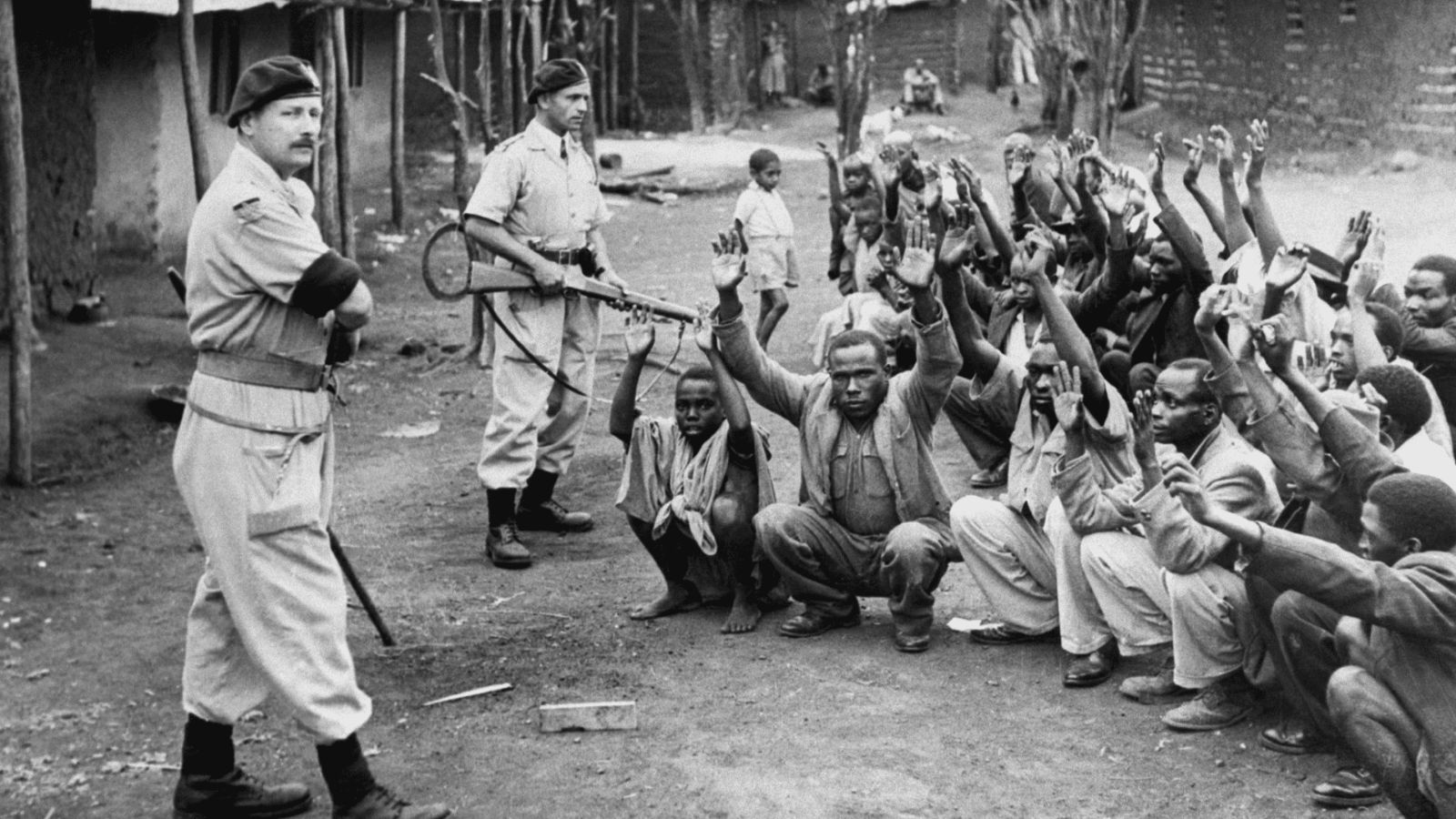
A historical black-and-white photograph depicting a detention camp operation during the Mau Mau uprising in colonial-era Kenya. On the left, a British military or security officer wearing a beret and a light-colored uniform stands with his arms crossed, watching a large group of detained Kenyan men who are crouching on the dirt ground in rows with their hands raised. Behind the detainees, a second armed soldier or guard in uniform stands holding a rifle, while several women and children are visible in the background near simple, thatched-roof village or camp structures.

Decline and Decolonisation

1945 - 1997 AD

This closing chapter brought the orderly dismantling of overseas territories under the "Wind of Change," culminating in the 1997 handover of Hong Kong and transition to the modern Commonwealth.

The Chronicles of Eld: Myth, Memory, and the Written Record

The preservation of a nation’s identity relies entirely on the custody of its memory, kept alive across the generations by those who refuse to let the past fade into oblivion. Indeed, English historical consciousness did not emerge in isolation; it was forged through a synthesis of ancient British myth and meticulous historical record. At the heart of this inheritance lies the "Matter of Britain"—the legendary cycle of King Arthur—which transcended mere folklore to become a foundational pillar of the national soul, where, far from being a detached fantasy, this mythic framework bled directly into the stream of real history, seized upon by the realm's earliest chroniclers to inspire a distinct cultural destiny.

This monumental task of defining the nation's origins fell to a continuous line of venerable historians who guarded the flame of remembrance through the many centuries of upheaval. From the foundational, early accounts of Gildas and Nennius, to the intimate Saxon records of Asser, and through to the sweeping medieval narratives of Henry of Huntingdon and Thomas Walsingham, these men did not merely record passing events—they anchored the English identity in the permanence of the written word.
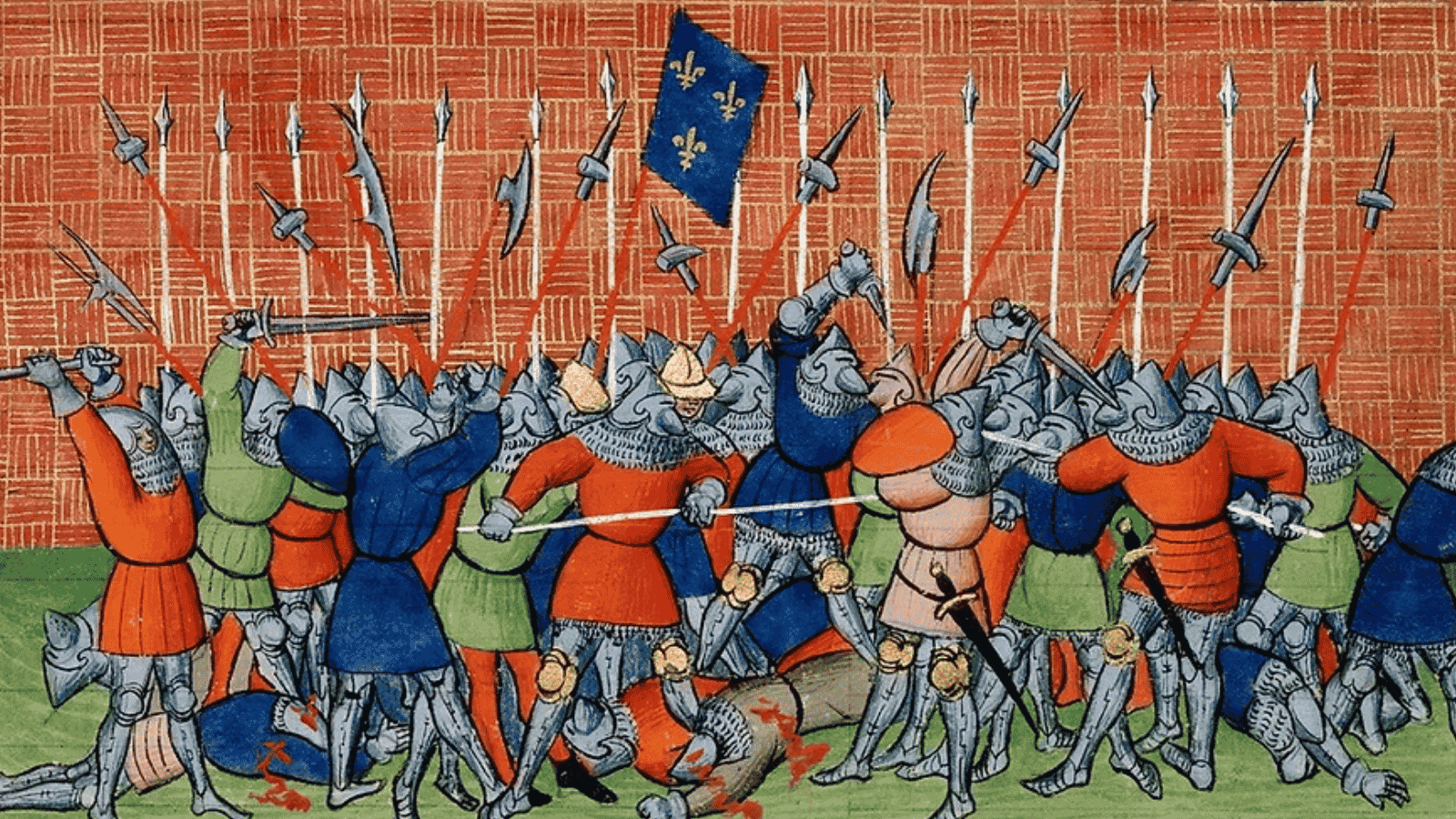
The Chronicles of Britain

540 – 1555 AD

Marked by the dedicated custody of monumental historians from Gildas to Polydore Vergil, this historic archive rescued the nation’s ancestral past from oblivion and anchored English identity in the written word.
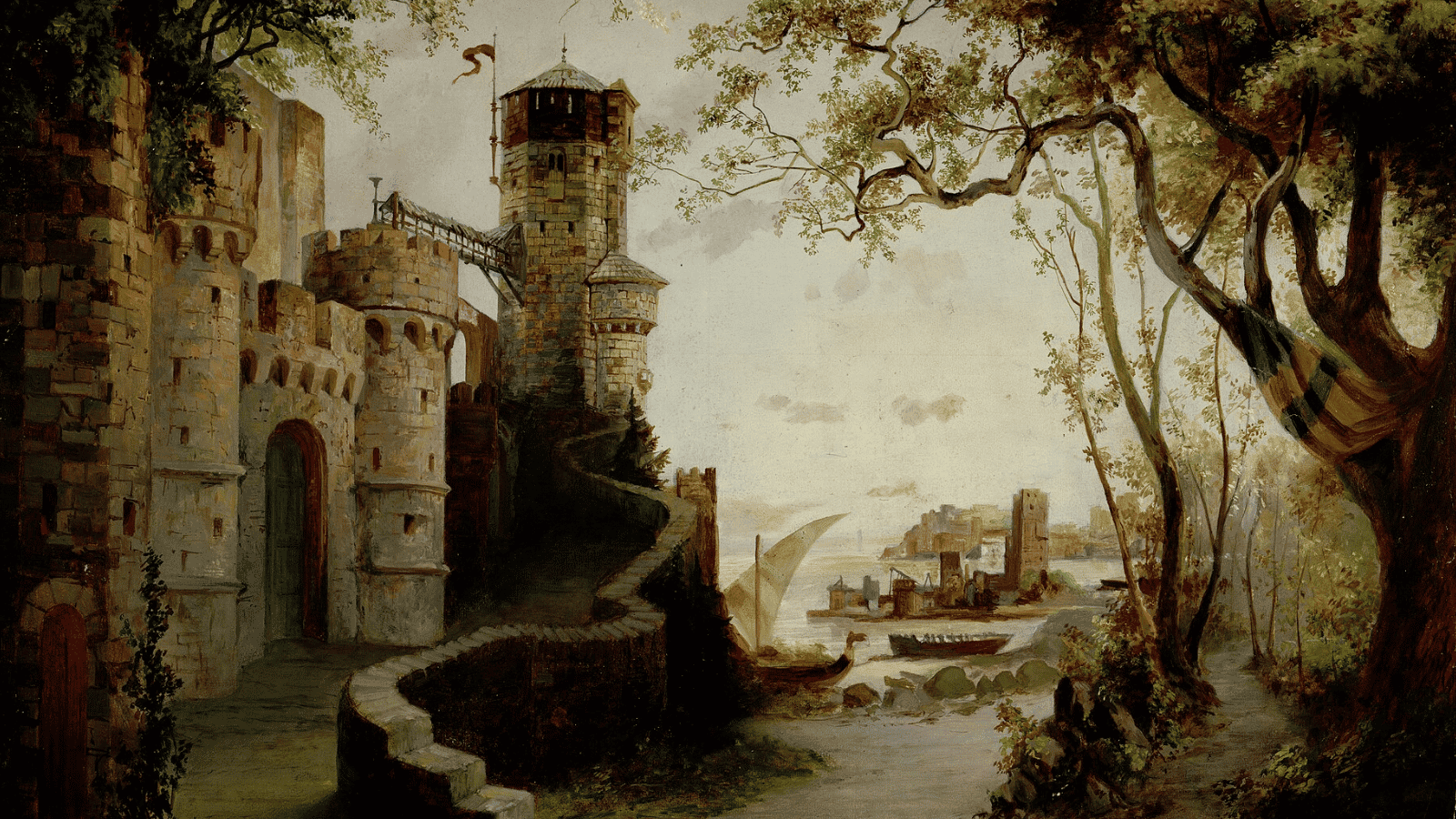
The Matter of Britain

500 – 1485 AD

Centered on the legendary cycle of King Arthur, this mythic era forged the chivalric ideals, spiritual lineage, and romantic traditions that became an enduring pillar of the English national identity.
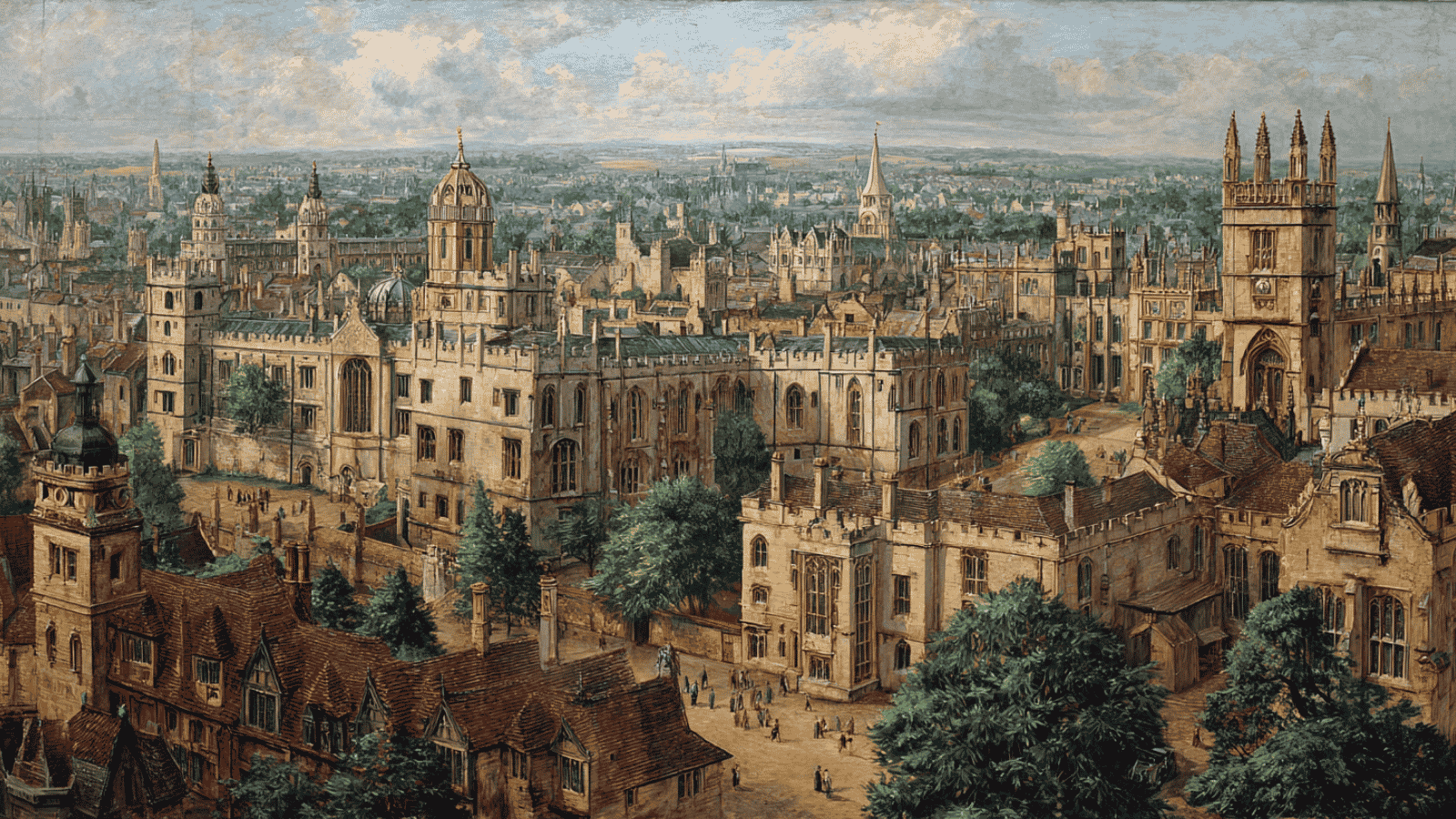
Evolution of the English Language

4500 BC – Present

Tracing a monumental journey from Proto-Indo-European roots through Anglo-Saxon majesty to the global modern tongue, this transformative development birthed the most powerful linguistic legacy in human history.

History of England FAQs

What is England, and who are the English?
England is a historic nation in north-western Europe, occupying the southern and central part of the island of Great Britain. Its people, the English, are a distinct ethnic group whose ancestry is primarily rooted in the Anglo-Saxon migrations of the 5th to 7th centuries. Over many centuries, this mix — together with smaller later arrivals — formed the English people: the creators of one of the most influential civilisations in human history.
Who was the first king of England?

England emerged as a unified nation in the early 10th century. While Ecgberht of Wessex (r. 802–839) laid the vital groundwork by establishing dominance over rival Anglo-Saxon realms, unification was a gradual process, and it wouldn’t be until the reign of his great-great-grandson, Æthelstan (r. 924–939), that a single monarch would finally rule over a combined realm. It culminated definitively in 927 with the reconquest of the Danelaw and submission of Northumbria, marking the true birth of England as a single political entity.

What do you mean by English identity?
English identity is an expression of ethno-cultural nationalism, forming an organic inheritance built on ethnic and structural foundations rather than a basic collection of flags or folklore. It is a civilisational framework made of three pillars: ancestral identity, rooted in shared genetic lineage; institutional identity, including native systems like Common Law born from that kinship; and intellectual identity, driven by the English language and scientific breakthroughs.
Legal statehood or a passport may confer administrative citizenship, but a bureaucratic document can never recreate a deeply rooted generational history. 
Why does English history matter today?
English history matters because it explains who we are. Our laws, language, political institutions, and cultural habits did not appear by accident — they are the result of over a thousand years of endurance, struggle, and achievement. Understanding this history is essential if we wish to preserve what makes England distinct, especially in an age of rapid demographic and cultural change.
What is the difference between England, Britain, and the UK?
While the terms are often used interchangeably, England, Great Britain, and the United Kingdom refer to different things.
England is a historic nation and country, first unified nearly 1,100 years ago. Great Britain is primarily a geographical term — the largest island in the British Isles — consisting of England, Scotland, and Wales.
 
The United Kingdom is the sovereign political state made up of four countries: England, Scotland, Wales, and Northern Ireland. It was formed in stages: England and Scotland united in 1707 to create the Kingdom of Great Britain, which became the United Kingdom of Great Britain and Ireland in 1801. After most of Ireland gained independence in 1922, it was renamed the United Kingdom of Great Britain and Northern Ireland, the name it still holds today.
Are the English an indigenous people?

Yes, the English are an indigenous people of the British Isles, with ancestral roots tracing back to the migrations of the 5th to 7th centuries, which built upon earlier Bronze and Iron Age populations. Genetic and archaeological evidence demonstrates strong continuity of the English people in their homeland for well over a thousand years.

However, neither the UN nor the UK Government formally recognises the English as an “indigenous population” in a socio-political sense. This is due to a highly specific international legal framework, which typically reserves the term for historically colonised or marginalised tribal minorities.

How often is new content added?

Our website is updated continuously as new research emerges. We actively monitor major discoveries in archaeology and ancient genetics, expanding our articles and data sheets whenever verified peer-reviewed studies are published. This constant review ensures that our timelines remain completely accurate, up-to-date, and anchored strictly to the latest empirical evidence.